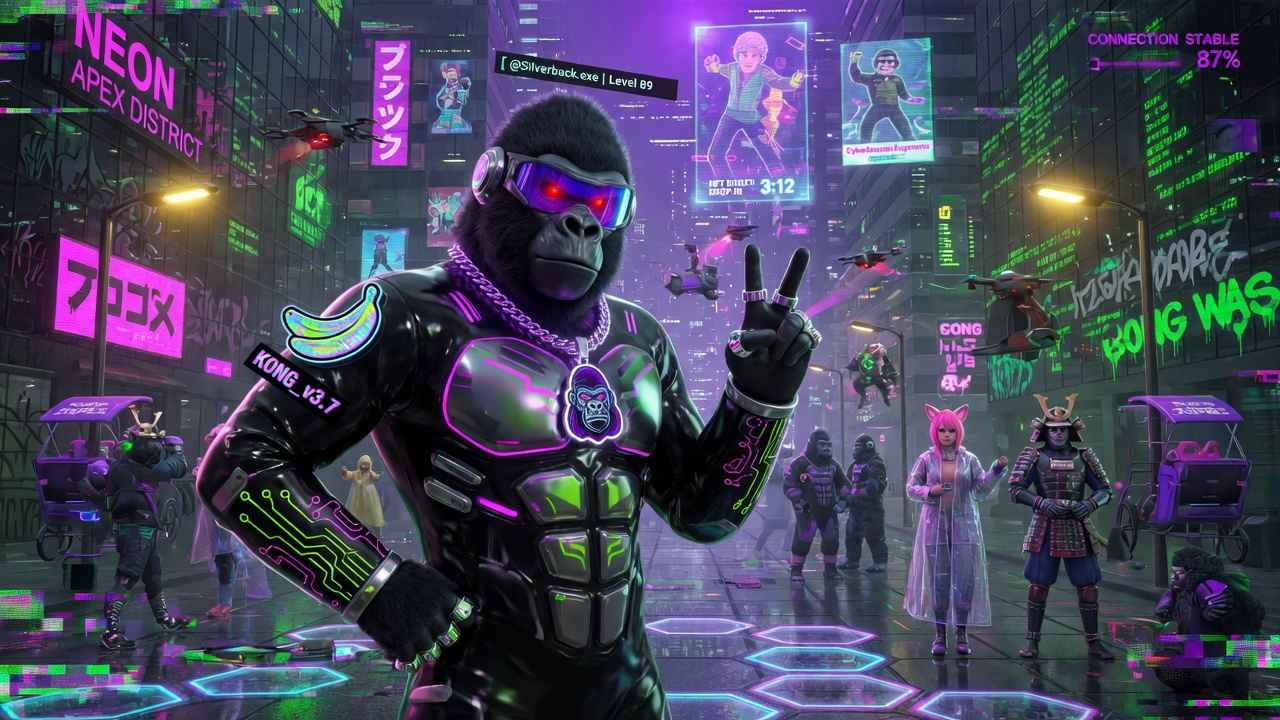
The Healing in the Headset

What the research actually says about virtual communities and mental health — and why the therapeutic power of virtual belonging turns out to be more real than most people expected.


A thing you already know but might not have words for

If you’ve ever spent real time in a virtual community — not just passing through, but actually living there, building things, forming relationships, coming back night after night to the same group of people — you already know something that the clinical research is only now catching up to. You know that the connections you formed in that space were real. You know that the support you received there mattered. You know that the person who stayed up until 2 AM talking you through a bad night wasn’t less of a friend because you’d never shaken their hand.

You also know that if you said any of this out loud to certain people, they’d look at you like you were describing an addiction. “You should get off the computer and make real friends,” they’d say. “Those aren’t real relationships.” And maybe you nodded, because the cultural script says they’re right, even though something inside you knew they were wrong.

The research says you were right and the script was wrong. Not in every case, not without nuance, and not without some genuine risks that are worth being honest about — but in ways that are documented, measured, and increasingly well-understood. Virtual communities are producing real therapeutic outcomes for real people, in populations that desperately need them. I want to walk you through four of the documented areas, because if you’re going to build virtual worlds, you need to understand that the spaces you create may end up being, for some of your users, the most important support system in their lives.

That’s a weight worth carrying carefully.

Continue reading The Healing in the Headset
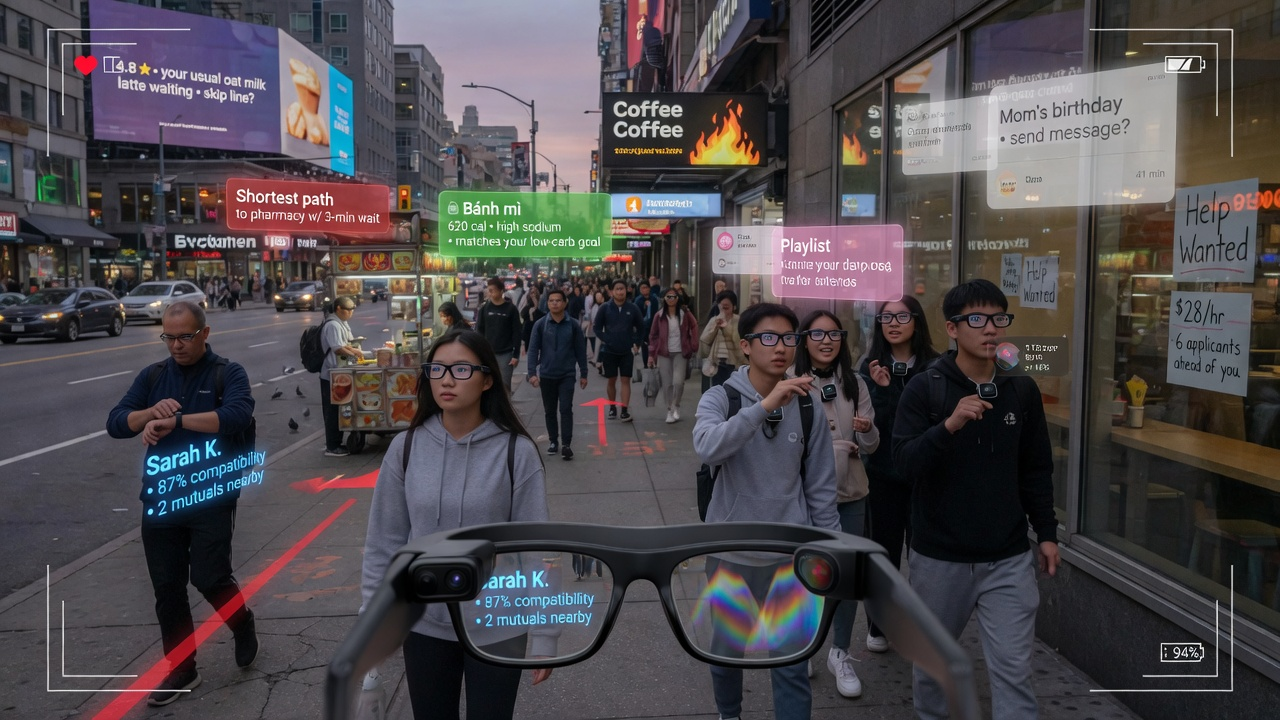
Always On

On what we already know about minds that never look away — and what it might mean to wear the screen on your face.


A different kind of question

The first three posts in this series were about things we can measure. Eye strain, with tens of thousands of subjects across decades of optometry research. Inattentional blindness, with controlled studies in driving simulators and flight cockpits. Pedestrian deaths, with police accident reports and peer-reviewed papers. All of that is real. All of that is solid ground.

This last post is going to walk us off the solid ground a little, and I want to be honest about that up front. The question of what happens when augmented reality moves from a thing you sometimes use to a thing you always wear is, as of this writing, an open question. The glasses are not yet ubiquitous. The contact lenses don’t exist yet. The data set we’d need to answer the big version of the question hasn’t been collected, because the experiment hasn’t been run on a big enough population for long enough.

So I’m not going to make predictions. I’m not going to tell you what AR glasses are going to do to society in 2035. I have no idea, and anybody who tells you they do is selling you something. What I’m going to do instead is something a little sneakier and a lot more honest: I’m going to walk you through what we already know about what phones have done to human attention, memory, and presence — because phones are basically AR glasses that haven’t quite made it onto your face yet, and the research on phones is a lot further along than the research on glasses. Then I’ll let you do the math.

Continue reading Always On

The Pokémon Go Body Count

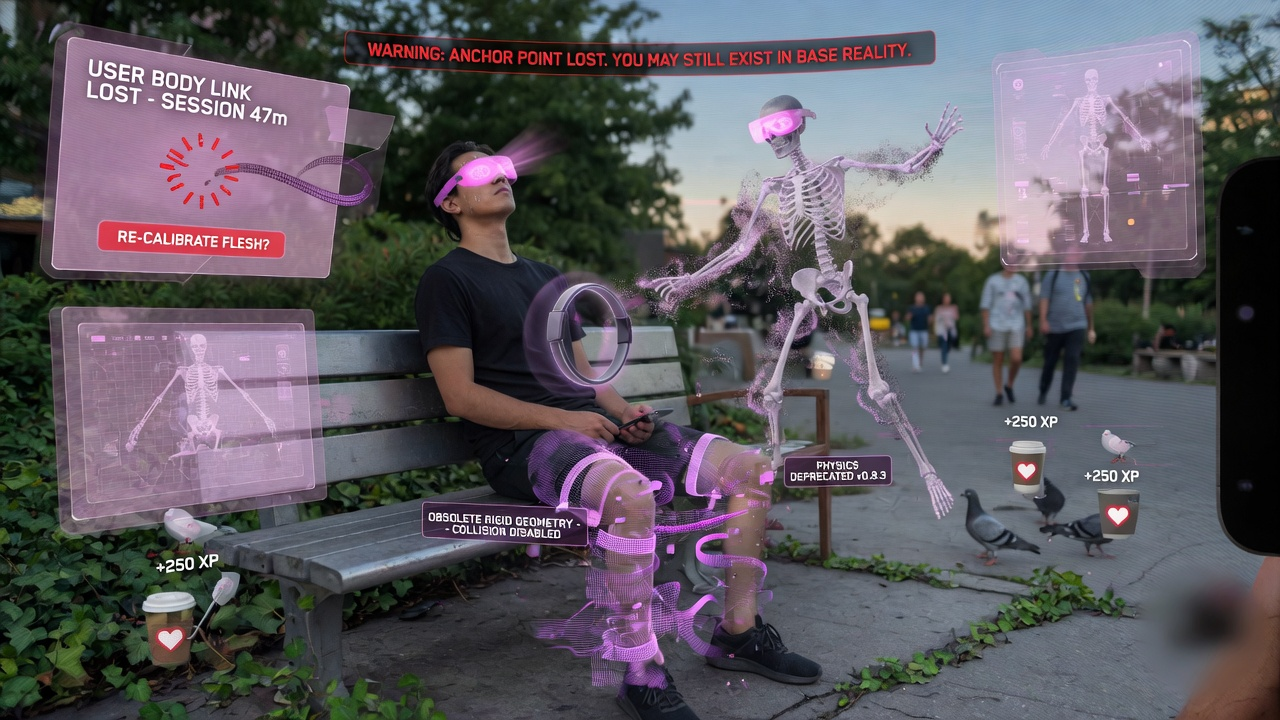
What happens when an augmented reality layer forgets you still have a body in the real world — and what the first big real-world dataset has to teach the next generation of builders.


The summer the world went outside

In July of 2016, something happened that the technology industry had been predicting for about twenty years and had nonetheless completely failed to prepare for. A small company called Niantic released a free mobile game called Pokémon Go, which used your phone’s camera and GPS to overlay little cartoon monsters onto the real world. To catch them, you had to physically walk to where they were. To battle in a “gym,” you had to physically stand near the gym’s real-world location. The game’s slogan was Gotta Catch ‘Em All, and within a few weeks, what felt like half of the developed world was outside trying.

If you were old enough to remember it, you remember the surreal sight of grown adults wandering through public parks at midnight in groups of twenty, their faces lit up by phone screens, occasionally letting out a cheer when somebody caught a rare one. People who had not voluntarily been outside in years were suddenly logging miles on foot. Cardiologists wrote excited articles about it. Public health researchers ran studies on the activity benefits. For a brief shining moment, it looked like augmented reality might single-handedly solve the obesity crisis.

And then the other dataset started coming in.

Continue reading The Pokémon Go Body Count

The Gorilla You Didn’t See

On attention, AR, and the strange truth that more information in your field of view often means less awareness of the world.


A famous experiment, in case you haven’t seen it

Sometime around 1999, two psychologists named Daniel Simons and Christopher Chabris ran an experiment that has since become one of the most famous demonstrations in cognitive science. They filmed a short video of six people in a room passing two basketballs back and forth — three players in white shirts, three in black. They asked viewers a simple question: count how many times the players in white shirts pass the ball.

Most people watch the video carefully, count the passes, and report a number — usually correct. Then the experimenters ask: did you see the gorilla?

The viewers stare at them. What gorilla?

They play the video again. About thirty seconds in, a person in a full gorilla suit walks into the middle of the frame, stops, faces the camera, beats their chest, and walks off the other side. The gorilla is on screen for a full nine seconds. It is not subtle. It is not hidden. It is, by any normal measure, the most interesting thing in the video.

And about half of all viewers, on the first watch, do not see it at all.

This effect has a name. It’s called inattentional blindness, and once you know about it, it changes how you think about pretty much every visual interface you’ve ever used. Including, very specifically, augmented reality.

Continue reading The Gorilla You Didn’t See

Realm Forge Academy: Forging the Future of Education with Modern Tools and Purpose-Driven Pedagogy

By D.W. Denney


The education landscape is shifting. Traditional four-year degrees are pricing out the very people who need them most, while the industries shaping our future — immersive technology, artificial intelligence, blockchain, game development, spatial computing — are evolving faster than any institution can keep up with. Meanwhile, aspiring creators and builders are left choosing between crushing debt and being left behind.

Realm Forge Academy was built to solve that problem.

Build Worlds. Not Debt.

That’s not just a tagline. It’s a promise — and it’s the founding principle behind everything we do at RFA.

Continue reading Realm Forge Academy: Forging the Future of Education with Modern Tools and Purpose-Driven Pedagogy

Where Two Worlds Become One: Building a Browser-Based Mixed Reality Tool for Education

By Donald Denney | Realm Forge Academy

There’s a moment in every emerging technology’s lifecycle when it crosses over from novelty to necessity. For mixed reality, that moment is now — and it’s happening inside web browsers.

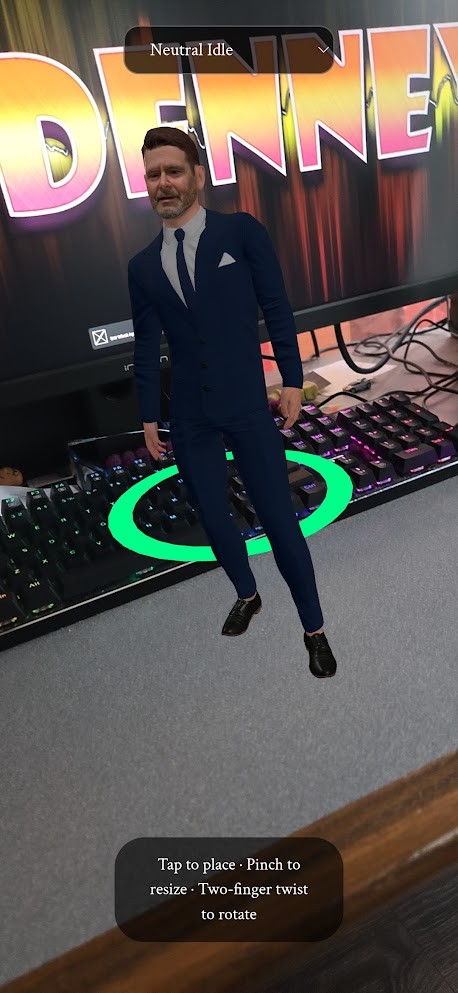
As part of the Realm Forge Academy course Defining a New Reality: Enter the Metaverse, I’ve built a browser-based mixed reality tool that lets students use their device camera to detect a flat surface in their physical environment and place a 3D avatar into a fixed position in the real world. No app store. No headset. Just a browser and curiosity.

[Image: Screenshot of the MR tool detecting a surface and placing an avatar]

Continue reading Where Two Worlds Become One: Building a Browser-Based Mixed Reality Tool for Education

🔮✨ The Architecture of Wonder: Understanding Magic Systems in Fantasy

By Professor DeeDubs | Realm Forge Academy


When we watch a wizard cast a spell in our favorite fantasy story, something magical happens beyond the fictional incantation itself. We either lean forward, invested in whether the magic will work—or we lean back, sensing that the author will simply make whatever happens most convenient for the plot. The difference between these two experiences isn’t luck or talent alone. It’s architecture.

Fantasy author Brandon Sanderson has articulated a framework for thinking about magic systems that has quietly revolutionized how creators approach the fantastical. His observations—often called “Sanderson’s Laws of Magic”—aren’t rules to be followed rigidly, nor are they secrets known only to published authors. They’re learnable principles that help us understand why some magical moments leave us breathless while others leave us shrugging.

More importantly, they’re tools you can use in your own creative work.

Continue reading 🔮✨ The Architecture of Wonder: Understanding Magic Systems in Fantasy

AR Art Overlay Prototype

Using AR to bring an art piece to life has rapidly turned into an active and exciting art genre. I was contacted by an artist looking for new ways to share their art with the world. They asked if I would be able to prototype an AR app that will take their finished art pieces and make it deeper by adding audio, animations, and information to the existing piece. I decided to create a prototype to help determine the feasibility of this idea.
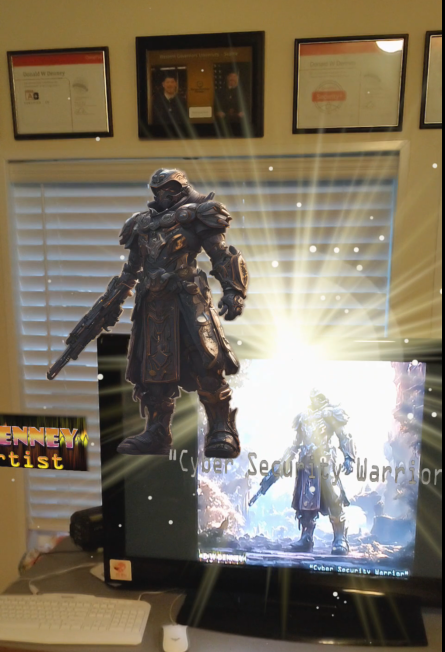
I chose my cyber warrior ai art piece

I then enhance it with special FX, artist information, and audio.

Here is a video of the final presentation. The artist is very interested in moving forward with some exciting new projects.

Skills demonstrated in this prototype:

  • AR Development
  • Develop AR experiences that use trackable targets in the environment
  • Build AR projects to mobile devices
  • Create basic application interactions with Visual Scripting
  • AR Design
  • Research future AR use cases to prepare for developing new kinds of applications
  • Evaluate platform capabilities and limitations in order to determine whether or not a given feature will work.

Virtual Reality AI Character Prototype

I created my AI virtual assistant named “Guie” over 10 years ago to help me with debugging code on large programming projects. She has been invaluable to me over these years while researching and developing applications for a wide variety of devices from Desktop PCs to mobile. I am very excited to announce that she is now available in XR to assist me with VR and AR application development.

I am proud to present this project as a demonstration of my skills in all aspects of the multimedia production process in addition to creating VR experiences. I hope you will agree that this turned out to be a great prototype!

Sample of my storyboard.

Following the best practices for multimedia development, I started by creating the storyboards and design documents. This critical step must not be skipped, even when developing a small project by yourself.

XR Rig Input Manager

Next I engineered a Virtual Reality Interaction Rig that will allow me to build and debug the project using VR devices.

AI Art representation of me working in my multimedia studios.

I tapped into my 20+ years of multimedia production skills to create the graphics used in the scene, as well as recording and producing the audio script.

Once all of the multimedia elements were in place, I began the process of bringing the project to life in Unity. Controlling and animating a 3D character is a fun and challenging task!

The final step was engineering the APK package for installation on the VR device. There are a complex set of configurations that must be correctly assembled in order for the package to be allowed into the secure OS that powers the VR headsets. Feel free to reach out to me if you would like a copy of the prototype.

Augmented Reality AI Character

One of the most exciting uses for augmented reality is to display AI characters into the real world. I was challenged to use the knowledge I have gained in the field of AR to produce a prototype that would place a life-size 3D character into the real world.

Continue reading Augmented Reality AI Character