The Four Pillars of a Mind

A scholarly look at why memory, personality, emotional intelligence, and motivation are the four things that make a character — or a person — feel real. And what cognitive science has to say about each of them.

The tavern keeper problem

Picture two tavern keepers. Both are characters in a game you’re playing, or in a novel you’re reading, or in an immersive world you’ve been invited to spend time in. Both pour you a drink, both take your coin, both say hello when you walk in.

The first one does nothing else. Every time you walk into the tavern, she gives you the same greeting. She doesn’t remember you. She doesn’t react to whether you saved her village last week or betrayed it. She has no opinions about the weather, no complaints about her back, no idea that the barrel of ale in the corner is cursed. She is, functionally, a vending machine for drinks wearing a person-shaped costume.

The second tavern keeper is also a character. Also pours drinks, also takes coin, also says hello. But she remembers that you helped her daughter recover from the fever six months ago, and her greeting is warmer because of it. She’s naturally cautious — when you ask about the cursed barrel, she weighs the question for a moment before answering, the way a cautious person would. She notices that you look tired tonight and pours you something a little stronger without being asked. And she wants something for herself, too, underneath all of this — she’s been saving up to buy out her brother-in-law’s share of the tavern, because she thinks she could run it better alone, and that ambition colors everything she does.

You know which tavern keeper is the memorable one. You also know which one is more expensive and time-consuming to build, whether you’re writing her as a novelist, scripting her as a game designer, or configuring her as an AI system. The question I want to walk through in this post is why. Why does the second one feel like a person and the first one doesn’t? What are the specific ingredients that have to be present for a character to cross the line from puppet into presence?

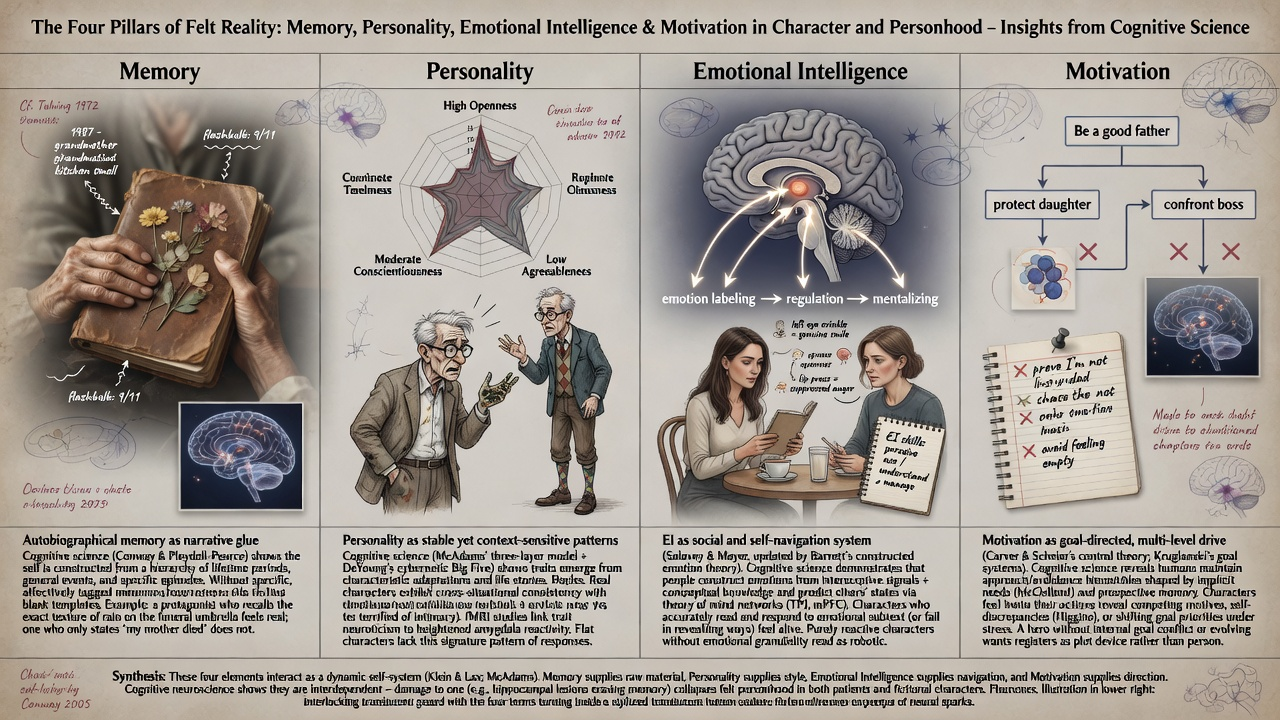
The answer, it turns out, is that there are exactly four of them. And they are not a designer’s preference. They correspond to four dimensions that cognitive scientists have been studying in humans for the last fifty years — four specific things the human mind uses to recognize another mind as being real. When you design a character who has all four, you’re not faking personhood. You are activating the parts of your audience’s brain that are already wired to respond to personhood, and those parts don’t care whether what’s in front of them is digital, printed, or physical.

I call these the Four Pillars. Let me walk you through each one, and the research that makes each of them load-bearing.

Continue reading The Four Pillars of a Mind
Cryptocurrency Visualization Tools For Educational Use

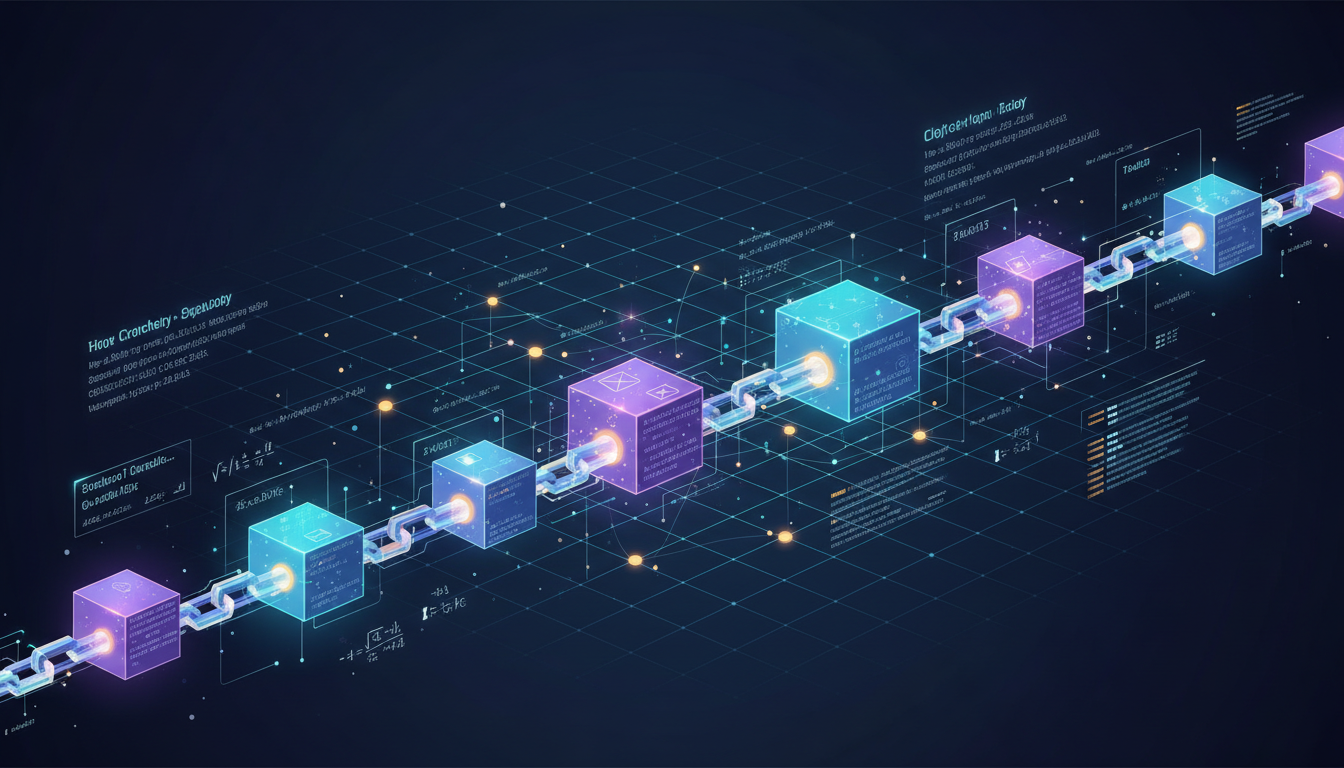
Cryptocurrency visualization tools provide an accessible entry point for understanding blockchain technology by breaking down complex concepts into interactive, visual experiences.

These educational platforms guide users through a natural progression: starting with cryptographic hashes that secure data, moving to individual blocks that contain transactions, then showing how blocks link together to form a blockchain. From there, learners can observe how these blockchains distribute across networks of nodes, and finally understand the coinbase transaction—where new cryptocurrency is created and mining rewards are issued.

The following safety and accuracy ratings evaluate leading visualization tools that support this learning pathway, assessing their reliability and security for educational use.

Continue reading Cryptocurrency Visualization Tools For Educational Use

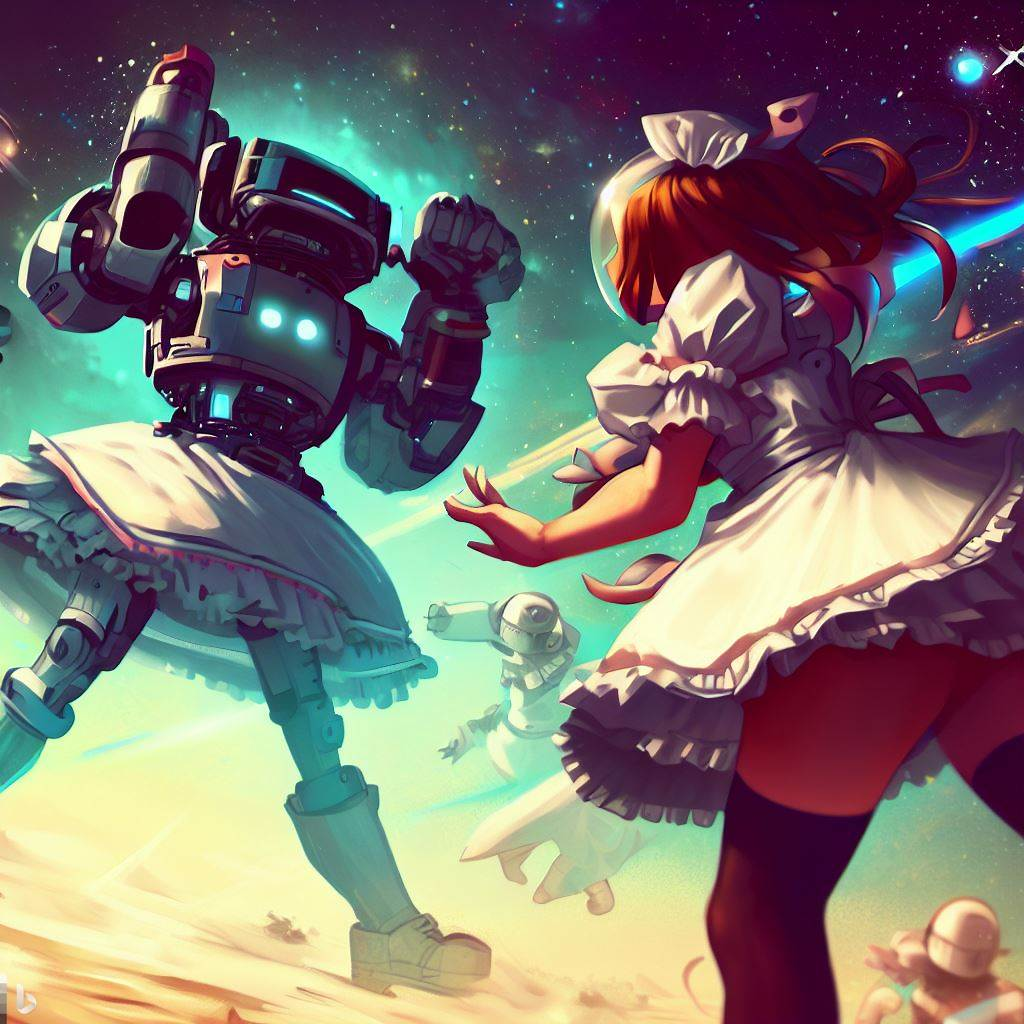
Space Maids

A space maid is a person who works as a maid in a space station, a spaceship, or a planet. A space maid wears a uniform that is similar to a traditional maid outfit, but with some modifications to suit the environment and the tasks. For example, a space maid may wear a helmet, a jetpack, or a spacesuit, depending on the situation. A space maid may also have some cybernetic enhancements or gadgets to help with cleaning, cooking, or fighting.

https://soundraw.io/edit_music?m=648ca15aa435a800126e4242

Continue reading Space Maids

Visual Scripting In Unity : Rotate an object

Here are variations on how to rotate an object using visual scripting. For this demonstration I made two cubes rotate automatically as well as via user input. One will rotate using the XBox controller and the other one is controlled using keyboard.

Continue reading Visual Scripting In Unity : Rotate an object

Web Assembly compiler

There are some exciting new developments in the world of browser based programming.  WebAssembly or wasm is a new portable, size- and load-time-efficient format suitable for compilation to the web. WebAssembly is currently being designed as an open standard by a W3C Community Group that includes representatives from all major browsers.

http://webassembly.org/

I’m really excited to test this out. Unreal Engine 4 now supports the new WebAssembly standard (also known as WASM) for HTML5, the fastest and most efficient way to compile and run C++ for the web! They are using Mozilla’s latest Emscripten toolchain (v1.37.9).

Vectr – Free Vector Graphics Software

Vectr is a free graphics software used to create vector graphics easily and intuitively. It’s a simple yet powerful web and desktop cross-platform tool to bring your designs into reality.

https://vectr.com/


The coolest feature is the real time sharing. Send anyone a Vectr document for real-time collaboration without the wait. Others can watch you create and edit designs live, whether you’re in the web app or desktop version.