What happens when an augmented reality layer forgets you still have a body in the real world — and what the first big real-world dataset has to teach the next generation of builders.
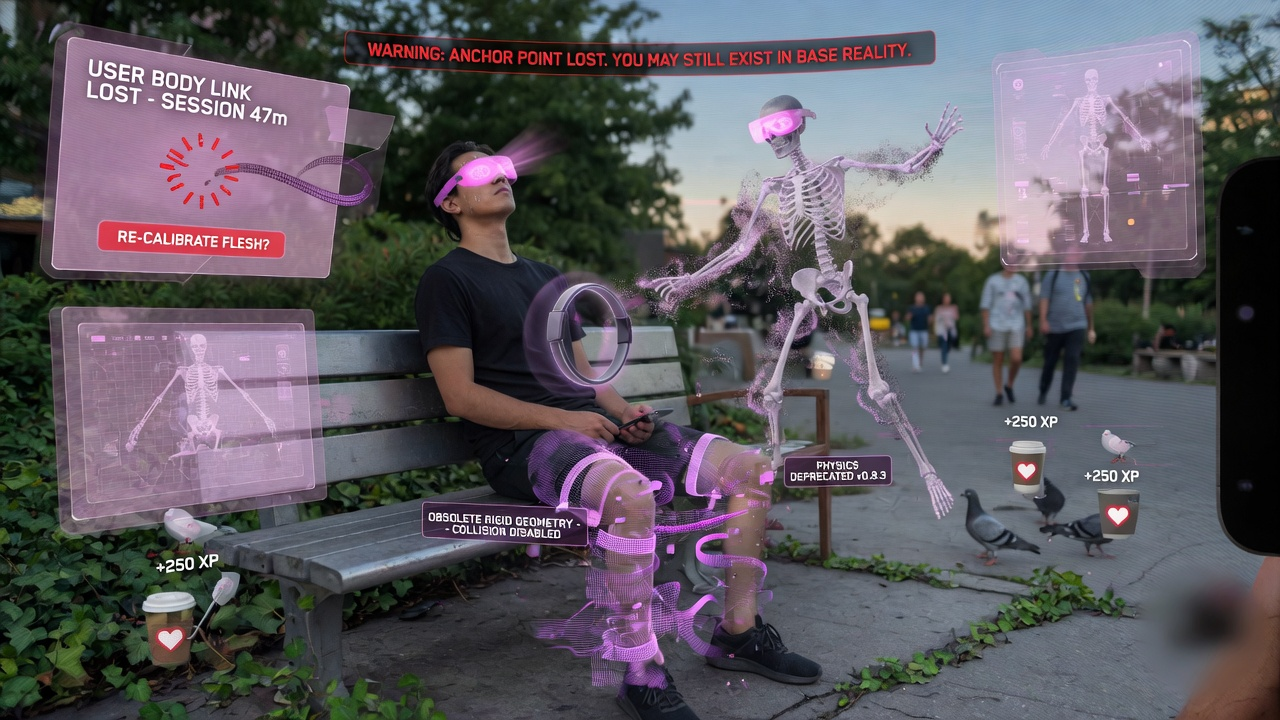
The summer the world went outside
In July of 2016, something happened that the technology industry had been predicting for about twenty years and had nonetheless completely failed to prepare for. A small company called Niantic released a free mobile game called Pokémon Go, which used your phone’s camera and GPS to overlay little cartoon monsters onto the real world. To catch them, you had to physically walk to where they were. To battle in a “gym,” you had to physically stand near the gym’s real-world location. The game’s slogan was Gotta Catch ‘Em All, and within a few weeks, what felt like half of the developed world was outside trying.
If you were old enough to remember it, you remember the surreal sight of grown adults wandering through public parks at midnight in groups of twenty, their faces lit up by phone screens, occasionally letting out a cheer when somebody caught a rare one. People who had not voluntarily been outside in years were suddenly logging miles on foot. Cardiologists wrote excited articles about it. Public health researchers ran studies on the activity benefits. For a brief shining moment, it looked like augmented reality might single-handedly solve the obesity crisis.
And then the other dataset started coming in.
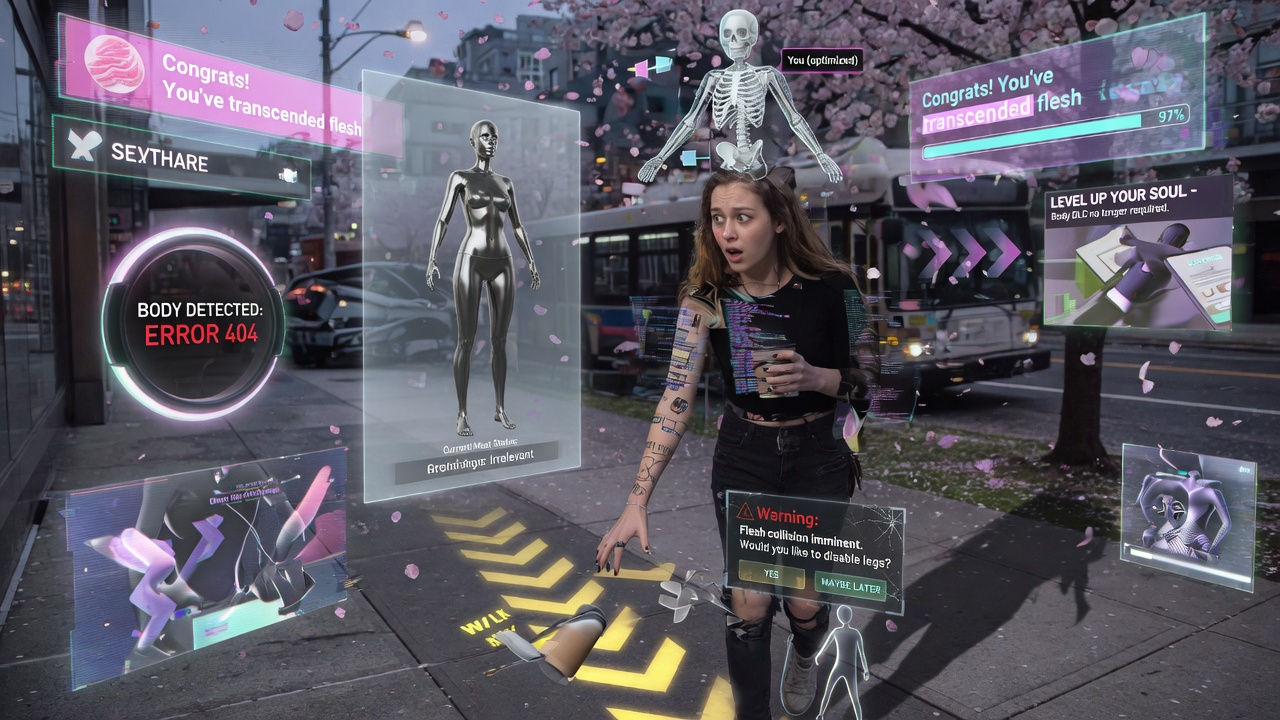
Two professors, twelve thousand crashes
While the rest of the world was celebrating, two finance professors at Purdue University named Mara Faccio and John McConnell got curious about something. They had access to a detailed database of every traffic accident in Tippecanoe County, Indiana, going back almost two years — more than twelve thousand incident reports. They knew exactly when Pokémon Go had launched. They wondered if the data would show anything.
What they found became one of the most cited papers in the early literature on augmented reality safety. The paper was titled, with admirable directness, “Death by Pokémon Go.”
Faccio and McConnell looked at every intersection in the county that was within a hundred meters of a PokéStop — one of the in-game landmarks that the app used as a draw to get players to specific physical locations. Then they looked at the crash rates at those intersections in the months before Pokémon Go was released, and the months after. The increase was 26.5 percent. Not a hand-wavy uptick. A statistically significant, two-and-a-half-month, hard-numbers, dataset-driven 26.5 percent jump in car crashes at the spots where the game was telling people to go.
In Tippecanoe County alone, they identified an estimated 134 extra accidents in the first 148 days after launch. Two of those accidents were fatal. The total economic damage in just that one Indiana county ranged from $5.2 million to $25.5 million. When the researchers extrapolated their findings to the entire United States — using the same methodology, applied to the same time window — they estimated 145,632 extra accidents, 29,370 injuries, 256 deaths, and an economic cost between $2 billion and $7.3 billion.
I want to be careful here. Extrapolating from one Indiana county to the entire United States is exactly the kind of move that should make you a little skeptical, and a different study using Japanese national traffic data found a much smaller and statistically nonsignificant effect, which suggests the real number might be lower or might be regional or might depend on how players in different countries actually behaved. The honest summary is that the truth is somewhere between “a definite measurable problem” and “a national catastrophe.” Even the conservative reading of the data is sobering. People died playing a game. That part is not in dispute.
The injuries that didn’t make the news
Car crashes were the biggest category, but they were not the only one. A literature review published in 2017 in Games for Health Journal gathered up everything the medical literature had on Pokémon Go injuries in the first year of the game’s life, and the list reads like a slightly absurd emergency room intake report. Players walked into trees. Players walked into other players. Players walked into traffic. Players fell into ditches. Players fell off retaining walls. Players fell off small cliffs. A case report in Oxford Medical Case Reports documented a player who suffered electrical burns after wandering into something they shouldn’t have wandered into. Two teenagers in California had to be rescued after climbing down a hundred-foot cliff face in pursuit of a Pokémon and getting stuck. Players in Bosnia were warned away from areas still littered with unexploded landmines from the war. There are reports — confirmed and unconfirmed — of players being lured to isolated PokéStops and robbed at gunpoint by people who had figured out exactly where the game was sending its users.
The University of Arizona trauma center documented specific patterns of injury in Pokémon Go players: fractures from falls, lacerations from walking into objects, vehicular trauma from being struck by cars. These were not unusual injuries. They were exactly the injuries you would expect from human beings walking around an environment they had stopped looking at. The interesting thing about the dataset is not that these injuries are exotic. It’s that they are completely predictable in hindsight, and yet basically nobody at the company that built the game seems to have predicted them in advance.
Why I keep using the phrase “the digital layer forgot you have a body”
Here’s the thing I want you to sit with, because I think it’s the real lesson in all of this and it generalizes far past Pokémon Go.
The game itself was not malicious. The developers were not trying to hurt anyone. The technology was not even particularly advanced — it was a pretty thin AR layer, basically just GPS and a camera and some cute graphics. And yet within months of launch, it had compiled a body count.
The reason is something I want you to write down somewhere. It’s this: a digital interface, by its nature, captures attention. A physical body, by its nature, occupies space. When the first one demands all of your attention, the second one keeps occupying space whether you’re paying attention to it or not. Your body keeps walking. Your body keeps standing in the road. Your body keeps approaching the cliff edge. The game, meanwhile, is not aware that any of this is happening. The game is showing you a Charizard.
This is the gap that gets people killed, and it is going to get worse, not better, as augmented reality gets more immersive. Pokémon Go was a phone game. You held the phone in your hand, which meant at least one of your hands was occupied with the device, and if you wanted to look at the screen you had to look down, which meant the phone was at least competing with your forward gaze rather than replacing it. The next generation of AR is glasses. The generation after that is contact lenses, if some of the research labs are to be believed. Each step removes more of the physical signals that used to remind you that you have a body. Each step makes it easier to forget where you are. Each step raises the stakes.
The thing the developers eventually did, and what it shows us
I want to give Niantic some credit here, because they actually responded to the data. Within a few months of launch, they added a feature that detected when the player was moving faster than walking pace and refused to let the game do most of its functions at vehicle speeds. They added warnings that flashed on the screen reminding players to stay aware of their surroundings. They worked with various organizations to remove PokéStops from genuinely dangerous locations, like the center of a busy highway or the side of an active volcano (this is a real example). The injury rate went down. The game is still played by millions of people today, and most of them are fine.
What I want you to notice is the order in which all of this happened. The dangerous version of the product shipped first, and the safety features got bolted on after the deaths started piling up. This is not a Niantic-specific failure. This is the default pattern of the entire technology industry, and it is the reason “move fast and break things” worked as a slogan for as long as it did. The things that get broken in software are usually not bodies, so you can iterate your way to a better product without anyone ending up in the trauma ward. AR breaks that pattern. AR puts the user’s body inside the experiment. The cost of an iteration cycle is no longer just a frustrated user — it’s potentially a real injury or a real death, and you don’t get to undo those in the next release.
Builders in this space do not get to iterate the same way builders in software-only spaces have always iterated. The price of being wrong is too high, and the price gets paid by people who didn’t sign up to be your beta testers. This is one of the most important mental shifts you have to make if you’re going to work on physical AR — and I think you’re going to need to make it on purpose, because nothing in your previous training as a coder or designer prepared you for it.
What this looks like in practice
So what do you actually do with all of this if you’re sitting at the start of your career, excited about AR, and you don’t want to be the person who builds the next thing that ends up in a trauma center case study?
First: spend some time with the medical literature before you start designing. The papers are all out there, mostly free, mostly in plain enough English that a motivated student can read them in an afternoon. Search terms like “augmented reality injury” and “distracted pedestrian” and “pedestrian fatality mobile phone.” You will be a better designer for two hours of reading than for a dozen tutorials on Unity scripting, because the tutorials teach you what you can build and the literature teaches you what you shouldn’t.
Second: when you design an AR experience, design the physical part of it as deliberately as you design the digital part. Where will the user be standing when they use this? What will their body be doing? What will they not be looking at while they’re looking at your interface? What happens if a car comes? What happens if they fall? These questions sound like they belong to a building code inspector, not a creative designer, but in AR they are creative design questions. You are not just designing pixels. You are designing the choreography of a human body in a real space.
Third: build in friction on purpose. This is the lesson Niantic eventually learned the hard way and it is worth absorbing without having to learn it the hard way yourself. Speed limits in your software. Forced check-ins with the surrounding environment. Required pauses. Refusing to do certain functions when the user is in motion. All of these feel, in the moment, like things that are making your product worse. They are making your product safer, and for an AR product, safer is a feature, not a tax.
Fourth and last: hold in your mind, as you design, the image of a real person walking through a real intersection in a real city, looking at the thing you built. Imagine them clearly. Imagine the curb. Imagine the bike lane. Imagine the truck. The truck does not know they are in your app. The truck does not care. The truck weighs eight thousand pounds and is going forty-five miles an hour and it has the right of way. Your interface owes that person enough respect to remember the truck on their behalf, because they are about to forget.
That’s the whole job, in this space. It’s a heavier job than the brochures make it sound. It’s also one of the most genuinely meaningful jobs you can take on, because the people who do it well are going to save real lives that the people who do it poorly are going to take.
Choose well. The next generation of this technology is going to be built by somebody. I’d rather it was you.
This is the third post in a four-part series on the cautionary side of AR. Next up: “Always On” — what happens to a mind that never looks away.